
The kitchen sink is one of the most used fixtures in any home. From washing ingredients and preparing food to cleaning up after meals, much of the daily kitchen routine happens around it. Yet despite how often it is used, the sink is often treated as just another basic fixture.
So what happens when you compare a traditional sink with a smart kitchen sink?
A traditional sink provides the essentials: a basin for washing, rinsing, and cleaning. For many homes, that is enough. But as kitchens become more compact and multifunctional, the limitations can become more noticeable. Food preparation, rinsing, cleaning, and other tasks often require additional counter space and separate tools, which can quickly make the area around the sink feel crowded.
A smart kitchen sink takes a different approach.
Instead of treating the sink as an isolated fixture, it can be designed as part of a more integrated kitchen workstation. Practical functions are brought closer together, helping make better use of the space around the sink and creating a more organized workflow.
The difference is not necessarily about having more technology. It is about making everyday tasks more convenient.
For modern Filipino homes, this can be especially useful. Condos, apartments, and contemporary residences often need to balance functionality with limited kitchen space. A well-designed sink area can help reduce clutter while keeping frequently used functions within easier reach.
This is also where the value of a smart kitchen sink goes beyond convenience. When the sink is designed around how people actually prepare food, wash, rinse, and clean, the entire kitchen can feel more efficient. Instead of working around the limitations of the space, the space works better around your routine.
Design is another consideration. Today’s kitchen is often part of the main living area, especially in modern homes and open-plan spaces. A sink therefore needs to do more than perform its basic function. It should also complement the cabinets, countertops, appliances, and overall interior.
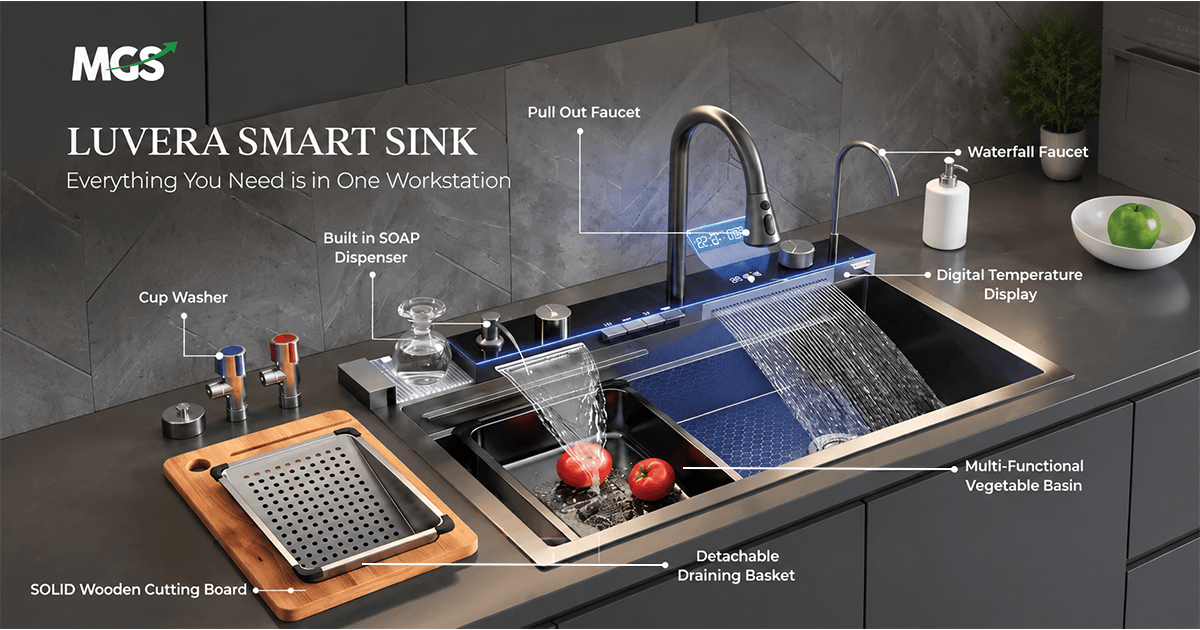
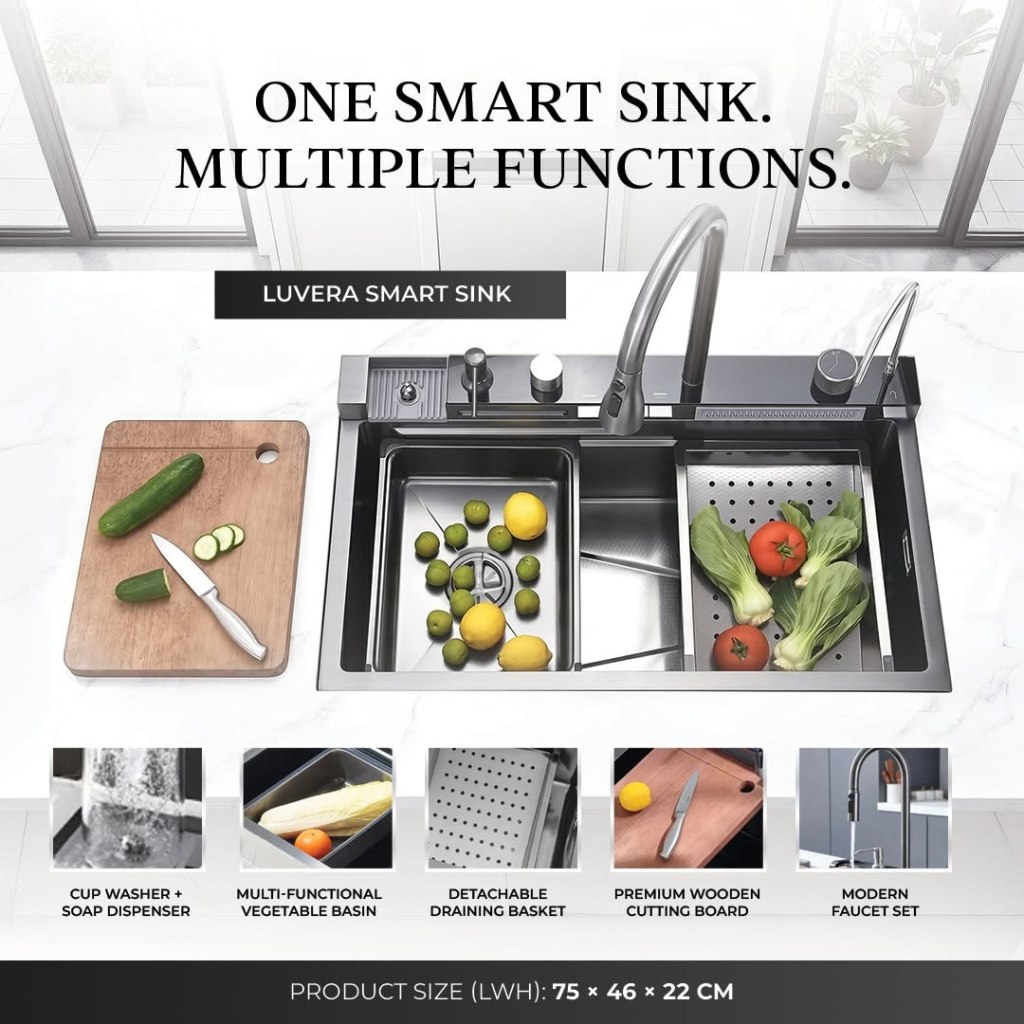
This is the thinking behind the MGS Luvera Smart Sink.
Designed for the modern kitchen, Luvera combines practical functionality with premium aesthetics to create a more integrated sink experience. Rather than functioning as a standalone fixture, it becomes part of a more organized kitchen workflow while helping maximize the space available.
So, is a smart kitchen sink really worth the upgrade?
It depends on how you use your kitchen. For someone who rarely cooks and has plenty of counter space, a traditional sink may continue to work perfectly well. But for homeowners who regularly prepare meals, deal with a busy sink area, or want a more organized and intentional kitchen, upgrading this frequently used fixture can make a noticeable difference.
Before choosing one, consider your daily routine. How much food preparation happens around your sink? Does your countertop become crowded easily? Do you often need additional tools or space for rinsing and cleaning? And does your current setup make kitchen tasks easier, or make you work around it?
These questions can help determine whether a smart kitchen sink makes sense for your home.
Ultimately, the difference between a traditional sink and a smart kitchen sink is not simply about adding more features. It is about creating a kitchen that uses its space more thoughtfully.
For homeowners renovating a kitchen or building a new one, the sink may seem like a small decision. But because it is one of the fixtures you interact with most, upgrading it can influence how the entire kitchen feels and functions.
Your kitchen does not always need more space. Sometimes, it just needs a smarter way to use the space it already has.
Explore the MGS Luvera Smart Sink at mgshome.ai and discover a more refined way to make your everyday kitchen work smarter.
— press release


Leave a comment