
For homeowners searching for the best solar battery in the Philippines, top solar systems, or a home energy storage solution that is genuinely worth the money, voltage is one specification that deserves more attention. Many affordable batteries in the market are commonly sold as 12V, 24V, or 48V systems, while more advanced residential energy storage systems can operate at several hundred volts.
At first glance, buyers may focus heavily on amp-hour or Ah ratings. A listing showing 200Ah or 300Ah can easily sound more powerful than one with a smaller number. The problem is that Ah alone does not tell buyers how much energy a battery actually stores. Voltage also needs to be included in the calculation.
For example, a 12V 300Ah battery contains approximately 3.6kWh of nominal energy, while a 24V 150Ah battery also contains approximately 3.6kWh. Although one battery advertises twice the Ah rating, both theoretically store a similar amount of energy. This is why buyers comparing top reviewed solar batteries should look at watt-hours or kilowatt-hours together with voltage and Ah instead of judging battery capacity from one specification alone.
Voltage becomes even more important once a solar battery needs to deliver significant amounts of power. For the same power output, a higher-voltage system requires less electrical current. Lower current can reduce resistive losses and lessen the electrical demand placed on cables and internal connections, which is particularly relevant for larger home energy storage systems designed to handle heavier household loads.
A 12V system delivering several thousand watts, for example, has to move considerably more current than a high-voltage battery system delivering the same amount of power. This is one reason higher-voltage architectures are increasingly seen in residential energy storage, EV charging, solar systems, and other applications where substantial amounts of energy need to be transferred efficiently.
Higher voltage can also give buyers more confidence when comparing battery systems because voltage is easier to verify than advertised Ah capacity. While higher voltage does not automatically guarantee better battery quality, it is harder to misrepresent the voltage class of a system compared with an exaggerated amp-hour rating.
Actual battery capacity requires proper testing to verify. Simply placing a multimeter across a battery’s terminals cannot confirm whether a battery advertised as 300Ah genuinely delivers 300Ah. Voltage, meanwhile, is much easier to measure directly. This makes verified specifications, independent testing, certifications, battery management systems, cell quality, usable capacity, warranty coverage, and manufacturer credibility especially important when looking for a solar battery worth the money.
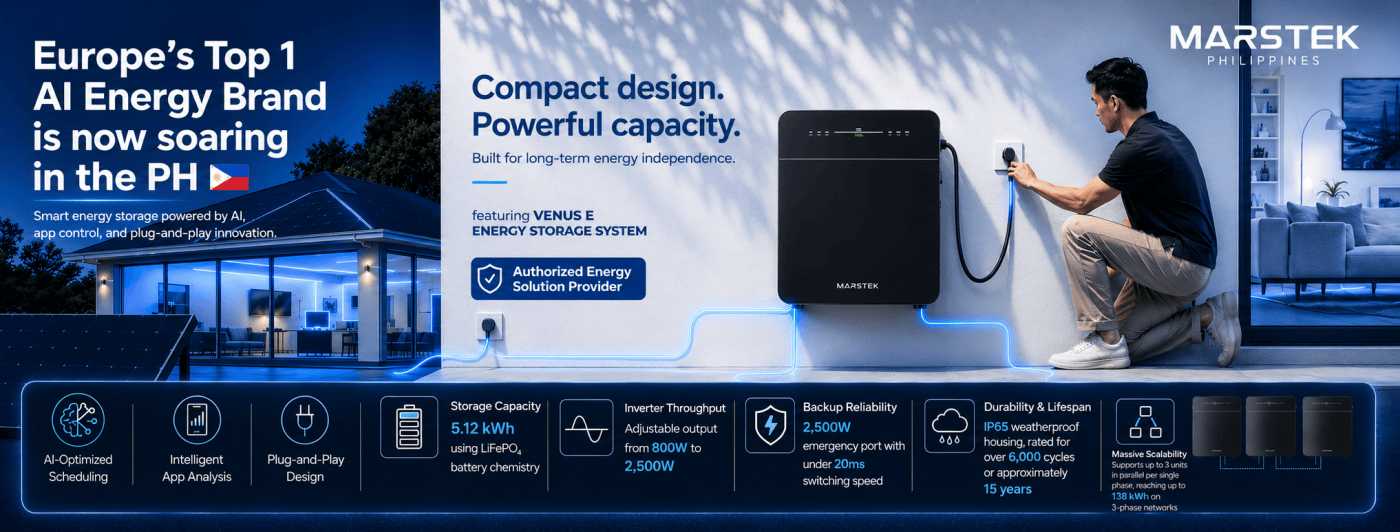
MARSTEK provides an interesting example of how high-voltage technology is being applied to modern residential energy storage. The MARSTEK MARS I PLUS Single-Phase uses a V-Boost battery architecture reaching up to 550V, combined with up to a 6kW hybrid inverter and as much as 12kW of solar input. Battery configurations currently range from 5.12kWh to 30.72kWh.
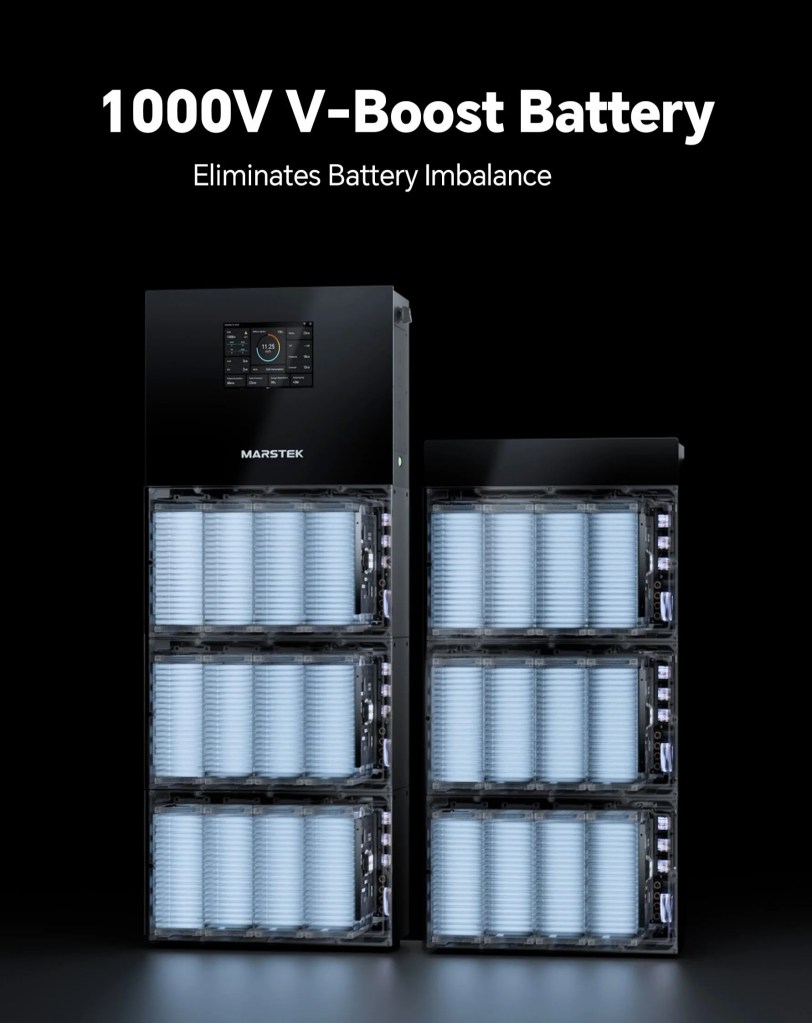
For larger applications, the MARS I PLUS Three-Phase extends the V-Boost architecture up to 1000V, with up to a 12kW three-phase hybrid inverter and 24kW solar input. MARSTEK also lists support for 25kW DC and 22kW AC EV charging, along with 12kW V2X capability for the three-phase configuration.
This places MARSTEK in a different category from many basic 12V or 24V standalone batteries. Buyers searching for the best solar system for home, high voltage solar battery, top solar battery system, or best home energy storage system are comparing more than battery capacity alone. The complete architecture includes the battery, inverter, BMS, solar input, output capability, expansion potential, energy management, and the way power moves through the system.
A higher-voltage solar battery will not automatically be necessary for every household. Smaller systems can still make practical sense for basic backup requirements. However, as households begin considering heavier appliances, larger solar arrays, whole-home backup, EV charging, and higher power demands, the advantages of a properly engineered high-voltage architecture become more relevant.
For buyers comparing which solar battery is best, top reviewed, or truly worth the money, the more useful approach is to examine the complete system rather than choosing based solely on the largest Ah number advertised. Capacity in kWh, operating voltage, inverter output, battery chemistry, cycle life, BMS protection, warranty, certifications, and manufacturer credibility provide a much clearer picture of what the buyer is actually getting.
MARSTEK’s move toward 550V and 1000V V-Boost residential energy storage shows how modern solar battery systems are evolving beyond the traditional low-voltage battery setup. For households planning a larger and more future-ready solar installation, high-voltage architecture is becoming an increasingly important specification to understand.
— press release


Leave a comment