
In a world where artificial intelligence is changing the way we work and learn, Gnowbe offers a powerful reminder that technology can still be deeply human. Created by So-Young Kang, Gnowbe is an AI-powered, mobile-first microlearning platform designed not just to share knowledge—but to help people apply it meaningfully in real life. With the help of smart tools and automation, Gnowbe makes learning more personal, engaging, and accessible to people everywhere.

“Gnowbe means ‘Grow Knowledge Into Being,’” So-Young explained during an interview on May 13 in Makati City. “Too much knowledge is in our head. When we train and teach often, they talk at you, and you meant to just sit and take notes. But that’s not true learning. Learning is when you participate, you think for yourself, and you apply what you heard in your life. Then it will change your being.”
Having spent more than 20 years in coaching and training, So-Young saw that traditional methods—like lectures and keynote speeches—often lacked lasting impact. Gnowbe was born from the need to move away from one-way teaching and toward learning that leads to real transformation.
So-Young shared, “So, Gnowbe platform is designed because I did coaching [and] training also like Anthony [Pangilinan] for 20 years or more… Because we’ve been doing this work and we care about transforming lives, you can not transform lives by just giving a keynote speech. If you just give a keynote speech or you just read an article, articles are great but you have to do something from what you’ve learned. And if you do not apply that to your life, you will forget it.”
One of the most powerful features of Gnowbe is that it was designed to be mobile-first, allowing learners to access content anytime, anywhere—even in areas with limited internet access. It also uses AI to help generate and deliver content efficiently. To make learning more inclusive, Gnowbe offers content translation into multiple languages, including Tagalog, so people can learn in the language they’re most comfortable with. By removing barriers like language, connectivity, and cost, Gnowbe brings quality education closer to everyone.
“That was the original design for why we created a mobile-first experience. And so that people who don’t have wifi can still have access in the middle of villages. So you have this great opportunity to still learning shouldn’t just be for those who have money, or those who have access. It should be for everyone… It was really designed for mobile first,” So-Young said.
Gnowbe allows users to go through bite-sized content on their phones, complete interactive tasks, and even collaborate with others. It encourages active learning rather than passive listening, helping people apply what they’ve learned to real life.
In a time when many digital tools aim to replace human interaction, Gnowbe takes a different approach.
So-Young shared, “So the whole idea of digitization is not to dehumanize. Many technologies are dehumanizing. They try to replace humans. I’m not for that. Our company’s vision is to humanize. And the way we designed Gnowbe was not to replace [people like] Anthony, but to expand and scale people like Anthony but still have the same human touch.”
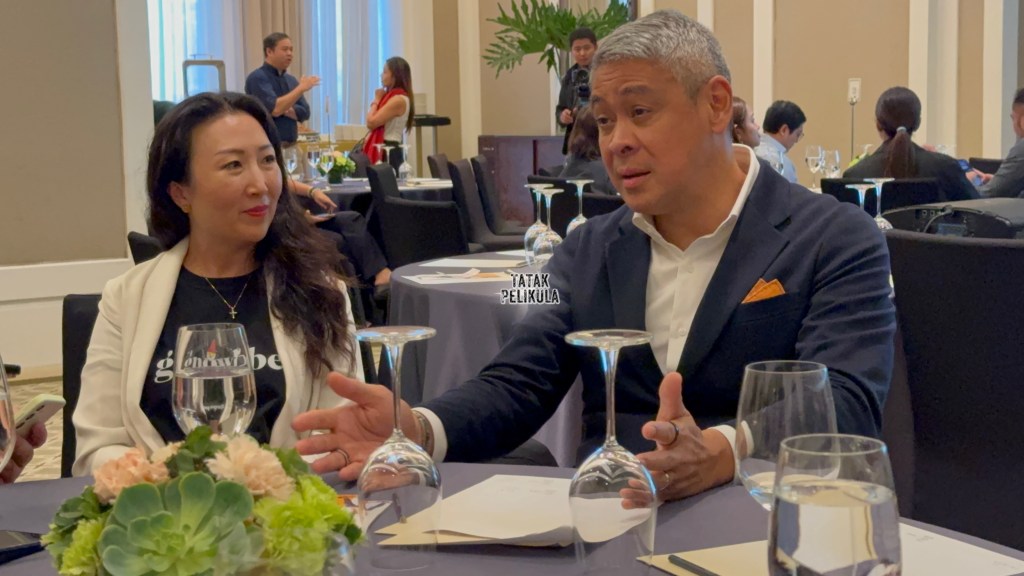
In the Philippines, Anthony Pangilinan and his company are leading the local distribution of Gnowbe, integrating it into training programs for both government and private sectors. Anthony sees it as a timely solution to make learning more consistent and accessible across the country.
“We have our top clients present to see to engage with it, to practice it. So, our immediate objective, of course, is to introduce it to those who we are already giving training programs… I’m doing sessions for Department of Health (DOH), for Department of Education (DepEd), and you know top all the way from Secretaries, to Asecs, to Usecs. I’m going to be doing leadership training programs. I just did a session for all principals of DepEd nationwide for example. So, we’re incorporation Gnowbe so it’s easier for teachers,” Anthony Pangilinan said.
“Imagine, a hundred and ninety thousand teachers. They all have their phones. If we equip them with Gnowbe, wow! The same quality in Metro Manila, whether it’s in Davao, Butuan, Isabela, Ilocos, you know, they will have it with them. So, that’s the goal,” he continued.
Anthony and So-Young both believe in the long-term vision of making learning more human, more effective, and more inclusive. The plan is to keep expanding Gnowbe’s reach in the Philippines, especially in sectors like education, health, and leadership development.
Gnowbe is not just another learning app—it’s a movement that encourages people to not just learn, but to live what they learn. With the power of AI and a deep commitment to human development, it’s helping shape a future where learning is truly for everyone.
 TATAK MNL
Leave a comment