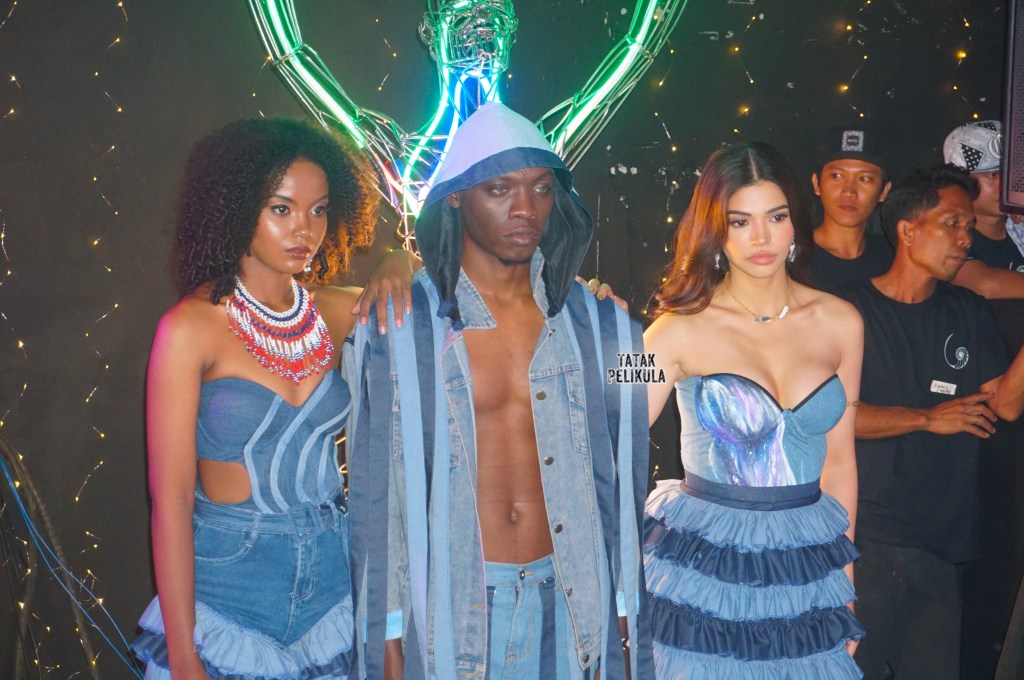
Brazilian model, fashion designer, and entrepreneur AlexiaNúñez is making waves in the Philippine fashion scene—not just with her designs but with her deep commitment to Indigenous communities and environmental sustainability. Her newly launched EON Collection embodies this advocacy, weaving together culture, tradition, and storytelling in a meaningful way.
A Journey to Mindanao
Alexia Núñez has made it her mission to support Indigenous communities, particularly the T’boli tribe from Mindanao, through her brand. She recalls how, upon arriving in the Philippines, many people warned her against visiting Mindanao due to its reputation for being dangerous. But instead of avoiding the region, she became even more curious and decided to experience it for herself.
“This is for them. My brand is all about supporting Indigenous People and protecting the environment here in the Philippines. Imagine, all the way from Mindanao, they’re here. I remember when I first arrived in the Philippines—one year and a few months ago—I asked people, ‘Oh, where should I go here in the Philippines?’ They would tell me, ‘Siargao,’ ‘Palawan,’ ‘Boracay’… and then they would end with, ‘But don’t go to Mindanao!’ I didn’t even ask where not to go. But they said, ‘Don’t go to Mindanao! It’s so dangerous.’ And I thought, ‘Why not?’
They told me, ‘You shouldn’t go there.’ And I was like, ‘Okay, that’s exactly the place I wanna go.’ If you tell me I shouldn’t go there, that’s where I wanna go! I wanna check it out on my own, right? I didn’t go to Boracay. I went recently with my friends… but no, I went to Mindanao.”
Her experience with the T’boli people left a deep impression on her. She admires their rich culture, their openness in sharing their stories, and their resilience. In return, she is committed to amplifying their voices and supporting their community.
“I met these beautiful people who carry a beautiful culture. They share their story. They share their tradition with me. They share their struggles also, ’cause I’m here to support them… I asked them, ‘You guys wanna go to Manila? I wanna share your story. I wanna share your culture with people from the city who were afraid for you. I wanna share how beautiful and amazing you are.’
I mean, look at them. I’m not afraid of them. I think I’m gonna share a picture with each and every one that said, ‘Don’t go to Mindanao.’ Let’s see what they would say.
For me, it’s a privilege to have them here. Maraming-maraming salamat po. Wow, grabe! Grabe talaga. Not easy—imagine, they live in paradise. Clean waters, clean air, beautiful jungle. Then now they’re here in Manila: concrete jungle, traffic, pollution, noise, ah! Thank you, thank you for being here.”
Bridging Brazilian and Filipino Cultures
Having lived in the Philippines for over a year, Alexia Núñez sees strong cultural parallels between Brazilians and Filipinos. She describes both as warm, joyful, and family-oriented, with a shared love for celebrating life, strong Christian values, and breathtaking natural landscapes.
“Filipino and Brazilian cultures are very similar. Very, very pareho. We are lovely people, very happy, always celebrating life, and family-oriented, Christians, so it’s easy to mingle. And we also have beautiful nature. Very easy! For me, it’s the same, actually.”
A Vision Turned Into Reality
The T’boli people’s tradition of dreamweaving—where designs are inspired by visions in dreams—became the foundation of Alexia’s own creative journey. While meditating one day, she envisioned an entire collection in her mind.
“About the process of my clothes, it was actually, like, it is for them… the T’boli tribe, especially them, they are known as the dreamweavers. You see, their beautiful costumes, all the layouts of the designs are made from visions they had in their dreams.
So, this is exactly what happened to me. One day, I was meditating, and then I had this vision with a full collection made in my mind. [gestures and mouths pencil strokes] I made notes, made drawings, and then I reached out to my friends. I asked them, ‘Oh, do you know any designer who could help me make this more beautiful, more professional—’cause I’m not a designer by profession.’ They sent me a few contacts and then there was one name that stood out.”
That name was Simon, a designer from Pangasinan. Though far from Manila, he and Alexia collaborated through video calls. When he presented the final designs, she was amazed at how perfectly they matched her vision.
“Medyo malayo kasi… 4 hours, 5 hours, di ba? We made a video call… We made it… He accepted the challenge to enhance, to improve. Then he presented me the design. I loved it! It’s beautiful. It’s exactly the way I envisioned…”
Fashion as Advocacy
Through her work, Alexia Núñez is doing more than just designing clothes—she is elevating Indigenous craftsmanship, challenging stereotypes, and bridging cultures. Her journey proves that fashion is not just about aesthetics; it can be a powerful tool for advocacy, representation, and change.



 TATAK MNL
Leave a comment